Understanding how fault is determined in a car accident helps protect your rights and prevents insurance companies from unfairly shifting blame in your claim. Nevada follows a modified comparative negligence system, which means fault is not always all-or-nothing. More than one driver can share responsibility, and compensation depends on each party’s percentage of fault.
This guide explains how insurance companies decide who is at fault in car accidents, what evidence is used, and how Nevada law impacts your claim.
If you were injured in a collision and are dealing with insurance disputes, speaking with an experienced Las Vegas car accident lawyer early on can make a meaningful difference in how fault is assigned and how your claim is resolved.
What Does “Fault” Mean in a Car Accident Claim?
In legal terms, fault means responsibility for causing a crash. Fault is usually based on negligence, which is defined as the failure to exercise reasonable care while driving. Insurance companies and attorneys evaluate who is at fault in a car accident by examining whether a driver acted carelessly and whether that behavior caused injuries or property damage.
To establish fault in a car accident claim, four basic elements are considered:
- Duty of care
Every driver has a legal duty to operate their vehicle safely and follow traffic laws. - Breach of duty
A breach occurs when a driver violates that duty—such as speeding, running a red light, driving distracted, or driving under the influence. - Causation
The breach must be directly connected to the accident. The careless action must be a fundamental cause of the crash. - Damages
There must be actual harm, including injuries, vehicle damage, or financial losses.
When these elements are present, that driver may be considered at fault. In many cases, more than one driver may have contributed to the crash, resulting in shared responsibility.
How Do Insurance Companies Determine Fault?
Insurance companies play a significant role in deciding who is at fault in a car accident, especially early in the claims process. After a crash is reported, insurers launch their own investigation to determine liability and limit their financial exposure.
During this process, insurance adjusters typically review:
- Police reports and citations
- Statements from drivers and witnesses
- Photos, videos, and dashcam footage
- Vehicle damage and repair estimates
- Medical records related to the accident
Understanding how insurance companies determine fault helps accident victims avoid common traps, such as giving recorded statements too early or accepting blame without a full investigation.
Although insurers present their investigation process as neutral, their primary goal is to minimize payouts rather than to protect injured drivers. Adjusters may look for reasons to assign partial fault to reduce the amount they owe or to deny claims altogether. This is why fault determinations made by insurance companies are not final and can be challenged with stronger evidence.
Evidence Used to Determine Fault in a Car Accident
Car accident fault determination rules and decisions are based heavily on evidence. The more documentation available, the harder it is for insurers to dispute what actually happened. Collecting and preserving evidence as soon as possible is one of the most valuable steps after a crash.
Below are the most common types of evidence used in accident fault determination:
Police Reports and Accident Documentation
Police reports often serve as a starting point in fault investigations. Officers document the scene, note road conditions, record statements, and may issue citations for traffic violations. While police reports do not automatically determine fault, insurers rely heavily on them, especially when they include diagrams, observations, or violations.
Police reports tend to be most impactful when:
- An officer witnesses clear traffic law violations
- Citations are issued
- The report includes detailed crash diagrams
Learn How to File a Car Accident Claim Without a Police Report
Find out how to handle a car accident claim when no police report exists and what steps can help you secure compensation.
Driver and Witness Statements
Insurance companies gather statements from everyone involved, including drivers, passengers, and witnesses. These statements are compared for consistency and credibility. Independent witnesses often carry significant weight because they have no financial stake in the claim.
Statements can also be challenged when:
- Accounts conflict with physical evidence
- A driver changes their story
- Statements were taken under stress or confusion
This is why injured drivers should be cautious about giving recorded statements without legal guidance.
Photos, Videos, and Dashcam Footage
Visual evidence can also be highly persuasive. Photos and videos help reconstruct how a crash occurred and may contradict inaccurate statements.
Helpful visual evidence includes:
- Vehicle damage from multiple angles
- Skid marks and debris
- Traffic signals and road signs
- Dashcam or nearby surveillance footage
Clear visuals can indicate speed, direction of travel, points of impact, and right-of-way violations.
Vehicle Damage and Accident Scene Analysis
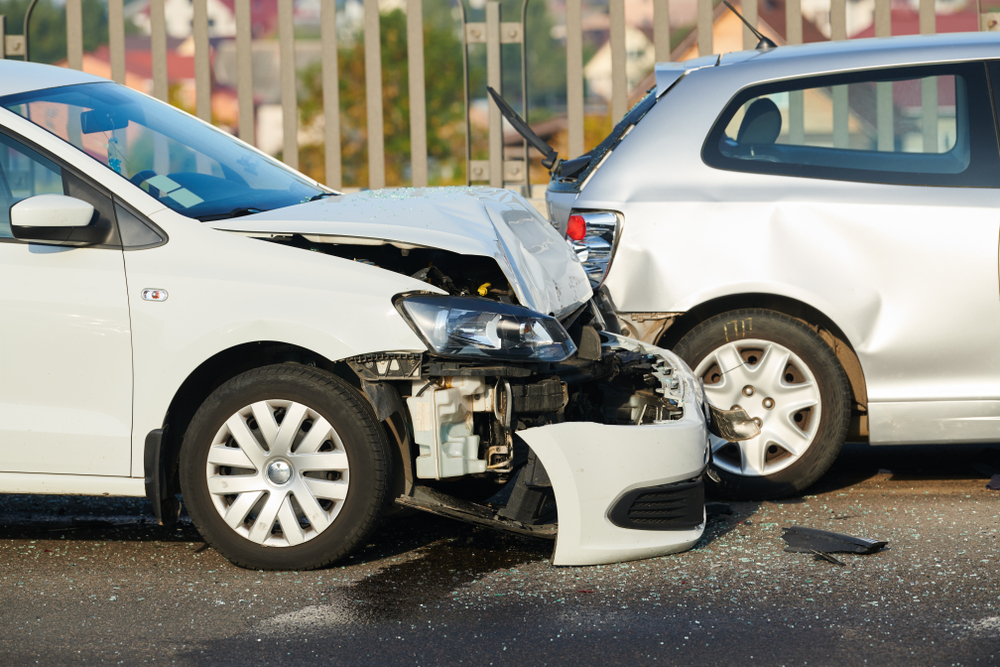
Damage patterns tell a story. The location and severity of vehicle damage often reveal which driver struck first, angles of impact, and relative speed. In disputed cases, accident reconstruction experts may analyze damage, debris fields, and roadway markings to determine fault more accurately.
Determining Fault When Multiple Drivers Are Involved
Determining who is at fault in an accident becomes much more complicated when more than two vehicles are involved. In these cases, insurance companies must evaluate shared liability, conflicting statements, and overlapping causes. Chain-reaction collisions, highway pileups, and lane-change crashes often involve multiple at-fault drivers rather than a single responsible party.
In multi-driver accidents, fault may be divided based on:
- Each driver’s actions leading up to the crash
- Whether one impact caused subsequent collisions
- Speed, following distance, and evasive maneuvers
- Traffic violations by multiple parties
These cases often involve disputed responsibility among multiple insurance carriers, which can delay claims and reduce settlement offers. Because layered liability is common, injured victims are frequently assigned partial fault even when they did nothing wrong.
Pro tip: Working with an attorney who specializes in multi-vehicle accidents can help prevent unfair blame-shifting.
Nevada’s Comparative Negligence Law Explained
Nevada follows a modified comparative negligence rule, sometimes called the 50% bar rule. This law allows injured drivers to recover compensation if they are less than 50% at fault for the accident.
Here’s how it works:
- If you are 0%–49% at fault, you can recover damages
- Your compensation is reduced by your percentage of fault
- If you are more than 50% at fault, you cannot recover compensation
For example: If you are awarded $100,000 in damages but found 20% at fault, your recovery would be reduced to $80,000.
This system makes fault determination extremely important because even small percentage shifts can have a significant financial impact. Insurance companies often use Nevada’s comparative negligence rules to argue partial fault as a negotiation tactic. But understanding how this law applies helps protect injured drivers from unfair fault assignments.

Common Scenarios That Complicate Fault Determination
Certain types of accidents regularly lead to disputes because fault is not immediately obvious. These scenarios often involve conflicting evidence, unclear right-of-way rules, or multiple contributing factors.
Rear-End Accidents
Rear-end collisions are commonly presumed to be the fault of the driver who struck the vehicle ahead. However, this presumption can be challenged in situations involving:
- Sudden or illegal stops
- Brake light malfunctions
- Unsafe lane changes
Evidence such as dashcam footage or witness statements may shift fault away from the trailing driver.
Intersection and Left-Turn Accidents
Intersections are one of the most common locations for serious crashes. How to determine fault in a car accident at an intersection often depends on right-of-way rules, traffic signals, and driver timing.
Left-turn accidents are particularly complex because turning drivers must yield, but speeding or signal violations by oncoming traffic can change fault determinations.
Conflicting witness statements and unclear signal timing often lead to disputes in these cases.
Multi-Vehicle and Pileup Accidents
Pileups often involve multiple impacts and drivers reacting differently under pressure. One driver’s negligence may trigger a series of collisions, but others may contribute by following too closely or failing to react safely.
Because multiple insurance companies are involved, multi-vehicle cases are often aggressively contested.
Hit and Run Accidents
When a driver flees the scene, fault determination becomes more challenging. Investigators rely heavily on physical evidence, surveillance footage, and witness accounts. Even without the other driver present, fault still must be established to pursue compensation.
What Happens If the Other Driver Disputes Fault?
You may be asking yourself, “Who determines who is at fault in a car accident when there is a dispute in blame?”
Disputes are common, especially when injuries are involved. When the other driver denies responsibility, insurance companies may:
- Re-review evidence
- Request additional statements
- Consult accident reconstruction experts
- Engage in settlement negotiations
If disputes cannot be resolved, the claim may escalate into formal legal action. At this stage, having guidance from an experienced Las Vegas personal injury lawyer can help protect your claim and prevent costly mistakes.
Can Fault Change During the Claims Process?
Fault determinations are not always final. As new evidence emerges, fault percentages can change. Additional witness testimony, medical documentation, or expert analysis may alter the assignment of responsibility.
This is especially common in cases where:
- Initial reports were incomplete
- Injuries worsened over time
- Surveillance footage surfaced later
Early legal involvement helps ensure evidence is preserved and properly presented before insurers lock in unfavorable fault conclusions.
How an Attorney Helps Prove Fault in a Car Accident Case
Proving who is at fault in an accident often requires more than submitting an insurance claim and hoping for a fair outcome. An experienced attorney plays a critical role in building a strong case and countering insurance company tactics aimed at reducing or denying compensation.
A car accident attorney helps prove fault by:
- Conducting an independent investigation beyond the insurance company’s review
- Preserving critical evidence before it is lost or destroyed
- Working with accident reconstruction experts when liability is disputed
- Gathering medical documentation that links injuries directly to the crash
- Communicating with insurance adjusters on your behalf
Attorneys also understand how Nevada’s comparative negligence rules are applied and how insurers attempt to shift partial blame. Legal representation levels the playing field and helps ensure fault is assigned based on facts rather than calculated insurance strategies.
Get Expert Legal Support
Our attorneys at Vegas Valley Injury Law specialize in proving fault after car accidents – protect your rights and maximize compensation.
Mistakes That Can Hurt Your Fault Determination
Your actions (or lack thereof) can significantly affect how fault is determined in a car accident that caused injury. Insurance companies look closely at your actions and statements, often using them to argue partial or full responsibility.
Common mistakes that can hurt a fault determination include:
- Admitting fault at the scene
Even casual apologies can be misinterpreted as admissions of liability. - Delaying medical treatment
Gaps in care may be used to argue injuries were unrelated or exaggerated. - Giving recorded statements without legal guidance
Adjusters may ask leading questions to shift blame. - Failing to document the accident scene
Missing photos or witness information weakens your position. - Accepting an early settlement
Early offers often reflect incomplete evidence.
Avoiding these mistakes protects your claim and preserves your ability to challenge unfair fault determinations.
Why Choose Vegas Valley Injury Law for Your Car Accident Case
Fault disputes are among the most challenging aspects of Nevada car accident claims. Vegas Valley Injury Law focuses on representing injured drivers facing insurance resistance, liability disputes, and complex fault scenarios.
Clients choose Vegas Valley Injury Law because we provide:
- Deep experience handling Nevada car accident claims
- Strategic approaches to disputed fault and comparative negligence
- Direct communication and personalized legal guidance
- A proactive approach to evidence preservation and claim development
By understanding how insurance companies determine fault and where claims commonly break down, our firm works to protect clients from unfair blame and reduced compensation.
Call Vegas Valley Injury Law for Help Proving Fault After a Car Accident
When fault is disputed after a car accident, insurance companies often move quickly to protect their bottom line. Delays, missing evidence, or early statements can all work against you. Having legal support early helps protect your rights, preserve critical evidence, and prevent insurers from assigning unfair blame.
Our team helps accident victims by:
- Taking over all communication with insurance companies
- Investigating crashes thoroughly to establish fault
- Protecting clients from damaging statements or tactics
- Pursuing full compensation under Nevada’s comparative negligence laws
If you were injured and have questions about how fault is determined in a car accident, getting answers sooner can make a meaningful difference in your claim. A timely legal review ensures fault is evaluated fairly and that your case is positioned for the strongest possible outcome.
Contact Vegas Valley Injury Law today to schedule a free consultation and get clear guidance on your next steps after a car accident.