Every year, millions of Americans are involved in car accidents, with thousands losing their lives or suffering severe injuries. As we step into 2026, understanding car crash statistics is more critical than ever. Not only does it shed light on the evolving risks we face on the road, but it also informs policymakers, insurance companies, and the general public about the measures needed to improve road safety.
With drunk driving, speeding, and distracted driving continuing to lead as major contributors to accidents, 2025 brings both challenges and hope for safer roadways.
Data from trusted sources like the National Highway Traffic Safety Administration (NHTSA) and the Insurance Institute for Highway Safety (IIHS) reflect notable trends and emerging patterns. As we dive deeper into the statistics, we’ll explore the causes, fatalities, demographics, and vehicle types involved in crashes, giving you a comprehensive understanding of the current state of road safety.
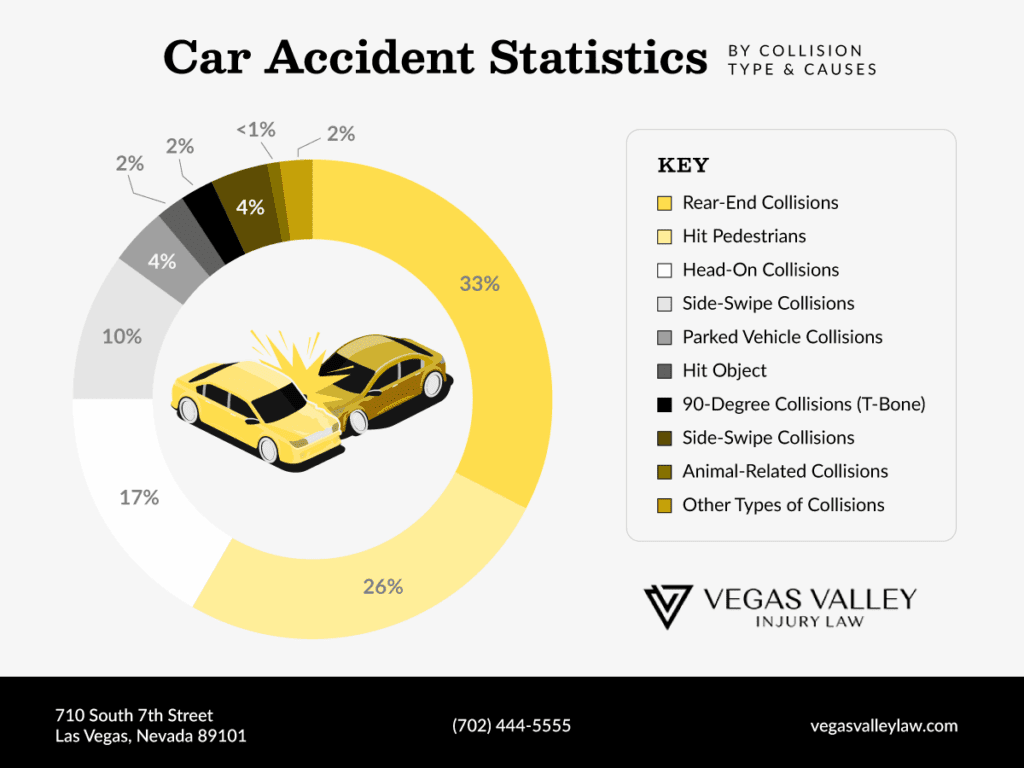
Get the Full 2025 Car Crash Statistics Report
Get in-depth insights into the latest crash data, causes, and safety trends across Nevada and the U.S. — all compiled from trusted sources like NHTSA and IIHS.
Key Causes of Car Accidents in 2025
Understanding the key causes behind car accidents can help prevent further incidents and keep our roads safer. In 2025, the following factors continue to play a significant role in the frequency and severity of car crashes:
Distracted Driving
Despite ongoing safety campaigns, distracted driving remains one of the leading causes of accidents in the U.S. Smartphones, infotainment systems, and even in-car distractions contribute to an alarming number of crashes. While the final numbers for 2025 aren’t available yet, distracted driving accounted for 8% of all fatal accidents in 2022, highlighting the persistent dangers of divided attention on the road.
The integration of technology in vehicles has provided convenience, but it also brings a higher risk for distractions. As infotainment systems, GPS, and mobile devices demand drivers’ attention, it’s more crucial than ever to raise awareness of how to minimize distractions.
Speeding and Aggressive Driving
Excessive speeding remains a significant factor in the severity of car accidents, especially in the aftermath of the pandemic, when road traffic conditions shifted drastically. Aggressive driving behaviors—such as tailgating, rapid lane changing, and failing to yield—further contribute to high-risk situations.
Driving Under the Influence (DUI)
Driving under the influence of alcohol or drugs remains a significant public safety issue in 2025. In fact, drunk driving accounts for one-third of traffic deaths in the United States.
These types of accidents not only result in severe injuries but also devastate families and communities. It’s vital to continue pushing for better prevention programs, stricter enforcement, and public education.
Weather-Related and Environmental Factors
Though not as controllable as human behavior, weather-related accidents still contribute significantly to the annual crash toll. When road conditions worsen, so do stopping distances and visibility, making it crucial for drivers to adjust their speeds and driving habits accordingly.
Car Crash Fatalities and Injuries
Car crashes lead to tragic losses every year. While overall fatalities have fluctuated, the long-term and devastating impact of these accidents remains constant. So far in 2025, the U.S. has seen an estimated 8.2% decrease in total crash-related fatalities compared to the same period in 2024, highlighting ongoing concerns about road safety—but also hope for the future.
Let’s explore fatalities and injuries in greater detail, breaking down the data by accident type and examining injury severity.
Fatal Crash Trends
According to recently published car accident statistics, the deadliest crashes involve passenger vehicles, but motorcycle, truck, and pedestrian accidents also account for a significant portion of fatalities. Here’s a breakdown of fatality rates by vehicle type:
- Passenger Vehicles (including pickups and SUVs: 60% of total fatalities
- Motorcycles: 15% of total fatalities
- Commercial Vehicles: 2% of total fatalities (often related to accidents involving large trucks on highways)
- Pedestrians and Cyclists: 18% of total fatalities
Injury Severity and Recovery
Every year, millions of crash victims sustain severe injuries, ranging from bruising and broken bones to traumatic brain injuries (TBI) and spinal cord damage. These injuries often result in long-term medical care and substantial financial burden. The emotional and psychological toll on victims can also be significant, with many experiencing anxiety, PTSD, or depression after a severe crash.
The good news is that these injuries are avoidable. Seat belts play a crucial role in preventing injuries and fatalities during car crashes. According to recent car accident statistics, wearing seat belts in the front seat is estimated to reduce the risk of death by 45% and injuries by 50%.
When a seat belt isn’t enough and you’ve been injured in a car crash due to another driver’s negligence, understanding the long-term impacts of injury severity can help you seek the right legal counsel for recovery. Working with an experienced car accident lawyer can help you navigate insurance claims, settlements, and lawsuit options to secure the maximum recovery possible.
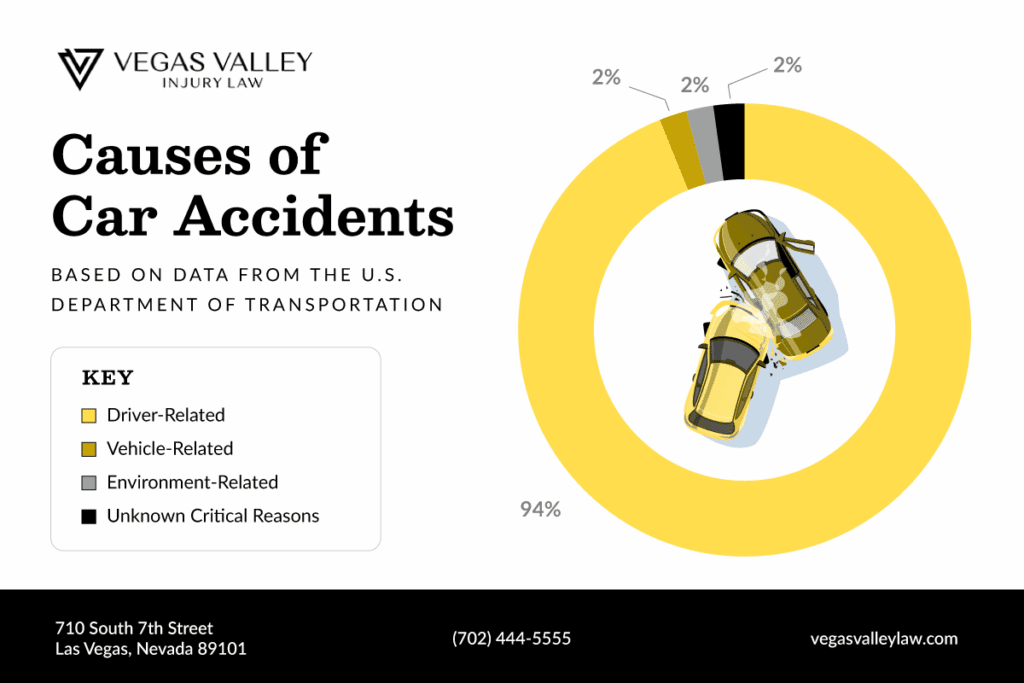
Get the Causes of Car Accidents PDF Report
See a simple, easy-to-read PDF that highlights the leading causes of car accidents, with percentages sourced directly from the U.S. Department of Transportation.
Demographic Insights: Who Is Most at Risk in 2025?
Certain groups are more vulnerable to car accidents than others. The following demographics represent the most significant risks on the road:
Younger Drivers, Age 25-34
Despite efforts to improve road safety for young drivers, those aged 25 to 34 continue to make up a significant portion of fatal crashes. Inexperience, impulsivity, and distracted driving are often the main factors at play. Almost a third of fatal speeding crashes in 2022 involved drivers in this age group.
Many young drivers are still learning how to handle aggressive driving or high-speed conditions, which puts them at higher risk.
Regional and Urban vs. Rural Differences
Urban areas often see higher volumes of accidents and accident-related deaths due to traffic density. According to a 2023 study, 59% of auto fatalities happened in urban areas where vulnerable pedestrians and cyclists share the road with passenger vehicles.
In contrast, rural roadways typically lack the safety measures found in urban areas, such as better lighting, guardrails, or traffic signals, making them prone to motor vehicle deaths as well.
Car Crash Statistics by State for 2025
Car crash rates vary widely across the United States, influenced by factors like traffic density, road conditions, weather, and state-specific traffic laws. States like Mississippi, Wyoming, New Mexico, and South Carolina saw the highest fatality rates relative to their population.
Below is a breakdown of car crash statistics for some of the most representative states:
| State | Accident deaths per 100,000 People | Fatalities per 100 Million Miles |
| Mississippi | 24.9 | 1.79 |
| Wyoming | 24.7 | 1.51 |
| New Mexico | 20.7 | 1.55 |
| South Carolina | 19.5 | 1.72 |
Source: IIHS.org
Nevada Car Accident Statistics
Nevada’s car accident fatality rate is consistent with the U.S. average of 12.2 deaths per 100,000 people. Factors such as tourism, high-speed highways, and the mix of urban vs. rural roads contribute to this trend.
Las Vegas has experienced varying accident rates in recent years. By August 2025, the Las Vegas Metropolitan Police Department (LVMPD) recorded 106 traffic fatalities, already exceeding the 87 deaths noted by the same point in 2024. However, the state has also implemented new road safety initiatives, including better lighting and speed control on high-traffic roads.
For more information on Nevada-specific car accidents, consult with a Las Vegas personal injury lawyer who specializes in these cases.
Car Crash Statistics by Vehicle Type
In addition to demographic trends, vehicle type plays a significant role in crash statistics. In 2025, the following categories of vehicles showed distinct patterns of involvement in accidents:
Passenger Vehicle Accidents
Passenger vehicles remain the most commonly involved in accidents, accounting for 33% of all crashes. These vehicles are typically involved in rear-end collisions, intersection accidents, and multi-vehicle crashes. Distracted driving and speeding are the leading causes of crashes involving passenger cars.
Motorcycle Accidents
Motorcycle accidents remain among the deadliest on the road. Motorcyclists represented 15% of all fatalities. Due to the lack of protection in a crash, motorcyclists are at a much higher risk of severe injury or death.
Commercial Vehicle and Truck Accidents
Accidents involving large trucks and commercial vehicles account for 2% of all fatal accidents. Truck drivers often face long hours on the road, contributing to fatigue-related accidents. The severity of these crashes is typically much higher due to the size and weight of the vehicles involved.
Pedestrian and Cyclist Crashes
18% of fatal crashes involved pedestrians and cyclists, with a significant portion occurring in densely populated areas like Las Vegas, where they share the road with much larger motor vehicles.
How 2025 Compares to Previous Years
While overall fatalities in 2025 decreased by 8.2% compared to 2024, the persistence of certain types of accidents—particularly those linked to technology and distractions—remains a challenge. These trends indicate both progress and setbacks in improving road safety.
If you’ve been a victim of speeding, distracted driving, or driving under the influence, Vegas Valley Injury Law is here to help. Share your story with us during a free consultation, and we will develop a personalized legal strategy to secure the compensation you deserve to rebuild from your injuries.
Need Help With Your Car Accident Case? Contact Vegas Valley Injury Law Today
Understanding car crash statistics is only part of the picture. The real challenge begins when it’s time to take action after a car accident. Whether you’ve been injured in a crash or need help with an insurance claim, having experienced legal support can make all the difference in your recovery process.
At Vegas Valley Injury Law, we specialize in helping car accident victims navigate the aftermath of accidents. Our team is dedicated to ensuring that victims’ rights are protected and that they receive the compensation they deserve. We offer free consultations and are committed to representing your best interests every step of the way.If you’ve been involved in a car accident, don’t wait to seek help. Our team is here to guide you through every part of your case and fight for your rights.
Schedule a Free Consultation with Vegas Valley Law
Speak with an experienced Vegas Valley Law attorney about your case at no cost. We’ll review your situation, explain your legal options, and help you understand the next steps.